
InMotion
A Premium Quality Progressive lens for day and night driving.
Standard progressive lenses can be ill‑suited for driving: their limited zones often leave visual fields insufficient, while low‑light conditions at night compound these restrictions—heightening hazards and accelerating fatigue. In fact, one in three wearers experiences night myopia, which markedly diminishes distance clarity after dark.
InMotion Progressive Lenses, by contrast, are fully customized for many driving conditions and variations of pupil size between Daytime and Night driving. Its optimized power distribution expands the driving field, and a dedicated night‑vision zone compensates for the refractive shift that occurs in dim light—delivering sharper acuity and markedly reducing eye strain, enhancing Driver Safety.
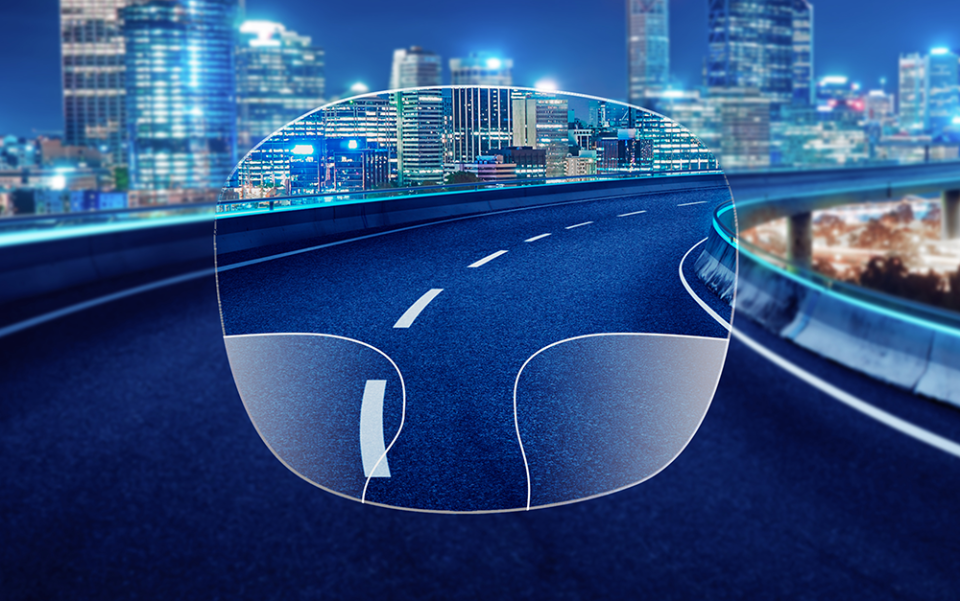
- Improves the visual experience of the wearer when driving in daytime and nighttime conditions.
- Compensates for the effects of night myopia with a unique zone to provide better focus.
- Optimized vision for a better view of the dashboard and mirrors.
- Reduces visual fatigue symptoms when driving at night.
- Greater visual acuity for easy focus and more agile eye movement.
Use: Specialty
Product: Personalized
Frequency of use: Regular
Drivers looking for the most innovative solutions.
Wearers looking for greater comfort, visual quality, and safety while driving.
Wearers who feel they see worse at night than during the day.
Wearers with all types of prescription and addition powers.
Material & blank provider: inMotion Progressive lenses are compatible with any blank provider and lens index.
Coatings: inMotion Progressive lenses are compatible with any AR coatings
Unique power distribution based on the visual needs of drivers
- Has a night vision area.
- The distance area is larger.
- The upper-intermediate area is wider.
- Lateral astigmatism is considerably reduced.
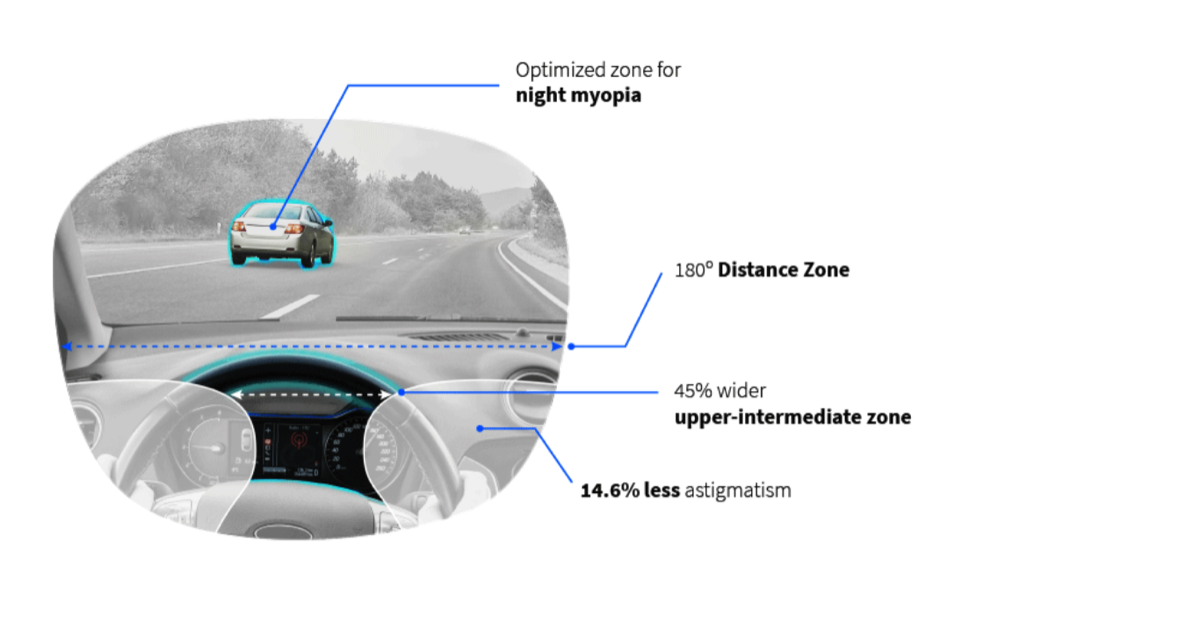
InMotion Progressive lenses have a unique power distribution based on the way we see while driving. They have been developed to maximize the near and mid-range vision zones.
Its unique power distribution is based on three key aspects:
Progression profile: This lens incorporates extra negative power (up to 0.25 D) in the upper area of the lens to compensate for the effects of night myopia.
Unwanted astigmatism: Endless Drive Progressive lenses have a maximum astigmatism level 14.6% lower than that of general-use premium progressive lenses. This improves vision in the peripheral areas of the lens and increases the visual range.
Unique Configuration: Endless Drive Progressive lenses are 70% wider in the distance and 45% in the upper-intermediate when compared to premium general-use lenses. Wearers will enjoy expanded views of the road, dashboard, and mirrors.
Incorporating Endless Technologies
-
Digital Ray-Path 2 Technology
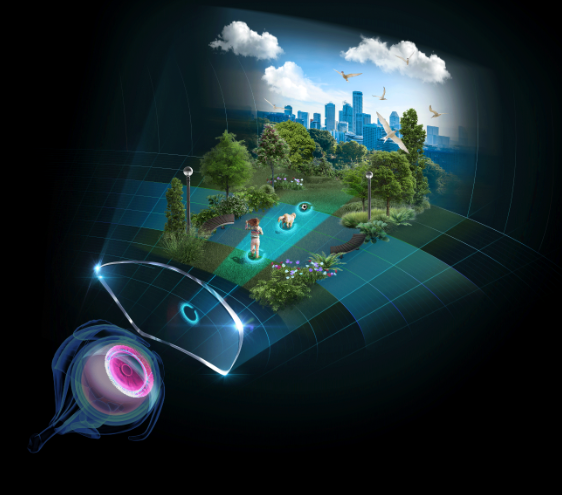 In addition to mathematically compensating for oblique aberrations, IOT Digital Ray-Path 2 adds the intelligent use of the wearer’s accommodation: the small power adjustments the eyes naturally make to view objects at different distances. Lenses customized with this technology have drastically reduced oblique aberrations across the entire field of vision. They are more comfortable, have impeccable visual quality, and more precise focus.
Pushing the limits of geometry in lens personalization
Digital Ray-Path 2 pushes the limits of geometry in lens personalization by incorporating the wearer’s accommodative capacity in the final lens calculation to further minimize oblique aberrations.
Oblique aberrations, found in any lens, include astigmatic and spherical power errors. These errors create an out-of-focus image as the wearer’s gaze moves away from the optical center of the lens. Eliminating them completely is not mathematically possible. Some residual power error remains, causing a slight blur.
 The eye lens system
First, it creates a simulation of the complete system that includes the eye and considers all available information on the wearer, frame, and lens blank.
Accommodative object space
Next, it incorporates the wearer’s natural ability to accommodate including the accommodative object space, the visual range associated with each direction of gaze.
Minimization of oblique aberrations
Finally, it analyzes and minimizes oblique aberrations at various distances and for each direction of gaze over the entire accommodative object space. The result: extremely clear vision and precise focus.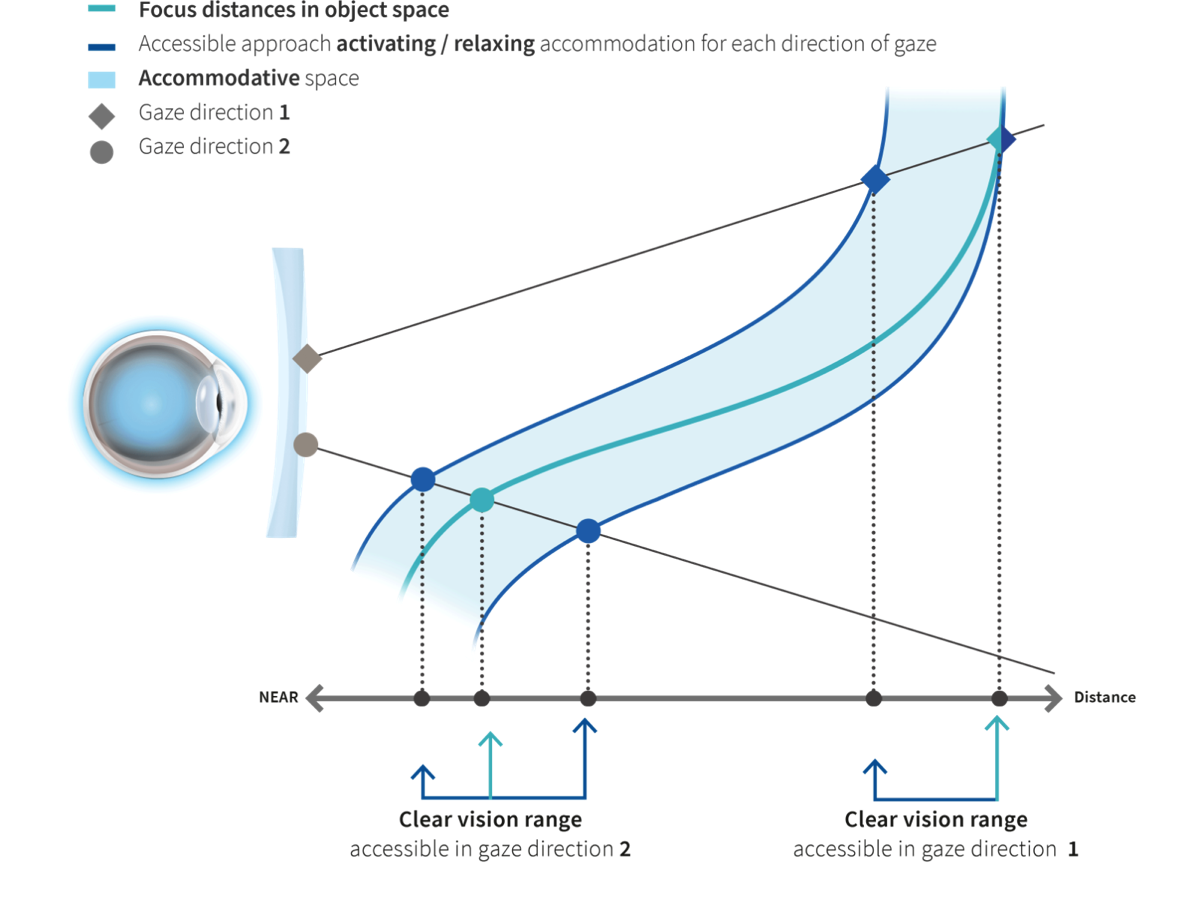
-
Steady Plus Methodology
 Steady Plus allows for more sophisticated control of the medium power distribution to improve performance for midrange and near vision. to achieve a perfectly symmetrical and smooth power distribution.
Superior image stability for more comfortable vision
Swim effect is a non-stable perception of the surroundings that causes discomfort, and reduces overall lens satisfaction, making adaptation more difficult. Despite advancements made in progressive lenses, patients still experience swim effect. Lenses designed with Steady Plus Methodology provide progressive lens wearers with more stable and natural vision.Distribution of spherical equivalent with Steady Methodology and Steady Plus Methodology
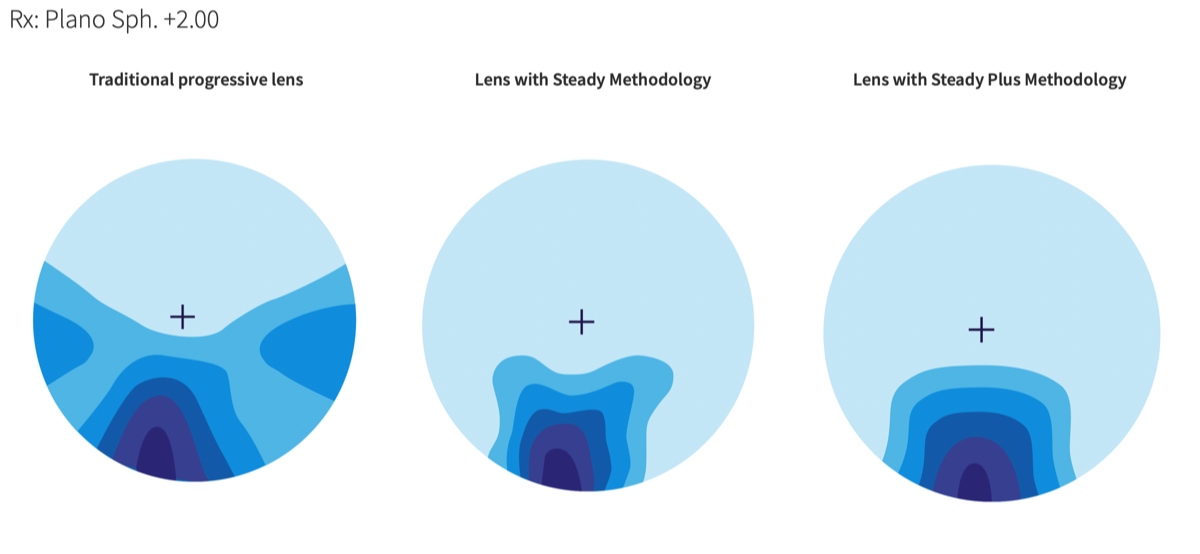 Steady Plus Methodology adds a substantial improvement in the wearer’s binocular performance and provides a smoother visual experience as both eyes perceive identical powers for each gaze direction. Past efforts to reduce swim effect in progressive lenses have primarily focused on the reduction and precise placement of unwanted cylinder error in the lateral areas of the lens. However, unwanted mean power also plays a significant role in the perception of swim effect, and in overall wearer satisfaction. Mean power error can drastically increase blur and reduce visual acuity.
______________________________________________________________________________
Materials: Plastic, Polycarbonate, Trivex, 1.60 Index, 1.67 Index, and 1.74 Index
Color Options: Clear, Transitions Gray, Brown, XTRActive, XTRActive Polarized, Transitions Style Colors, All Photofusion X Colors, Blue Protek, Polarized Gray C and Brown C, Polarized Colors, Polarized Mirrors
______________________________________________________________________________